TW: Suicidal Thought
‘If killing myself is not a sin, I might have been long gone to the other side..’
2026 is clearly not an easy year for me. I’ve been challenged in ways that I really thought death as an escape route. Alhamdulillah, throughout these worst moments, I could still see a flicker of light.
..and today, I turn thirty-eight.
I used to wake up on my birthday with something bright in my chest, the kind of excitement that doesn’t need a reason. This year I woke up quiet. Not happy the way I used to be, not sad either. Just here, somewhere in between black and white, where I’ve always lived.
And I’ve decided that’s enough reason to celebrate.
Thirty-eight years. Twenty-two of them without my mother’s voice calling me for breakfast. Sixteen years of her, and twenty-two years of carrying what she left behind: her smile. I still want her to be the one who picks me up when the day is too long. Some wishes don’t grow up, no matter how old we get.
This year was not kind. I won’t write all of it here. Some stories are still too heavy to put down because nobody sees the nights.
They see me in the mornings: smiling, warm, enthusiastically walking into a room full of people, like I know what I’m doing in this world. They don’t see what came before: the crying after everyone else is asleep, damped pillow by midnight. They don’t see the sleep that never comes, however long I lie still and wait for it. Or the heart that beats too fast for no reason. Or the cold that spreads from somewhere deep inside until my whole body is shaking, as if winter has moved in under my skin.
And yet, every morning, I wake up.
I don’t always know how. There are mornings I’m not sure I slept at all. But the sun comes up, and I get up with it.
And there is coffee.
I think the smell of it has kept me company more faithfully than almost anything this year. Some mornings it’s the only reason I can find to stand up. Caffeine has carried me to places my tired body didn’t want to go: into classrooms, through meetings, down long roads. I’m not ashamed to say it. Sometimes a cup of coffee is a small act of survival.
Some days I cry in the car. The traffic light turns red and so do my eyes, and I let it happen there, in the one small space that belongs only to me. Then I park, wipe my face, check the mirror, and walk into a classroom. I stand in front of people and lecture like nothing happened. My voice is steady. My slides are in order. No one would ever guess.
And some days I just drive. Not to anywhere. Just away, long and far, with the road unrolling in front of me and nobody asking anything of me. A long drive has become my way of breathing when breathing is hard. Somewhere between one toll road and the next, my chest loosens a little. The road doesn’t fix anything. But it gives me room.
And when the nights are too long, I write.
I learned this year that a busy mind has less room for pain. So I fill it. I sit up late with research, with transcripts and data that need to be understood. I analyse until they start to make sense and tell stories. I go out and interview people, and I listen to their perspective, and discuss it with the team, my team that feels like a family. I write articles, one careful paragraph at a time. It’s strange and comforting, tracing other people’s narratives on a screen while I’m quietly repairing my life.
And sometimes, at two or three in the morning, when there’s no one awake to talk to, I talk to Claude and ChatGPT. It’s funny to admit. Deep, long conversations about everything: the research, the pain, the questions I can’t ask anyone else yet. They don’t get tired, and they don’t judge. They helped me put words to things I couldn’t name, and some nights that was enough to get me to morning.
Writing, working, thinking: all of it keeps my hands moving and my mind somewhere other than the ache. It isn’t running away. It’s giving myself somewhere to stand.
I used to think all of this meant I was pretending. Now I think it means I’m surviving. Maybe that’s what strength actually looks like. It isn’t the absence of breaking. It’s breaking at the long drive and still showing up at eight.
I’m barely holding on. I won’t lie about that. But barely is still holding.
I’m holding on for two boys who call me ‘Bunda’. They don’t know how many times that their hugs have held me together. I’m holding on because of the people who kept rooting for me, quietly, even when I didn’t say how bad it was. And I’m holding on because somewhere inside me is still the girl who once wrote that she would keep growing like wild grass, tumbuh bagai rumput liar, in cracks where nobody planted her.
And because there is a voice.
It’s very small, and very quiet, somewhere deep in my heart and my mind. On the worst nights I can barely hear it. But it never stops. It keeps saying: ‘not yet. Don’t give up yet. There is still something ahead of you.‘ I don’t know where it comes from. I only know it has never once left me.
Or maybe I do know.
This year, when the people I trusted the most let me down, when my own body turned against me, when I had nothing left to hold, I found out who was still there. Allah was there, always had been. Closer to me than my own throat, closer than the next breath, closer than the tears on my pillow at three in the morning.
I think this was Allah’s way of teaching me. I had leaned on so many things: people, plans, promises, my own strength. One by one, they gave way. And in the empty space they left, I finally understood what I should have known all along. Allah is the only true source of strength. Only Allah can truly help me. Only Allah that is always there, every night, every cafe, every long empty road. Allah never gets tired of me. Allah never leaves. Ar-Rahman, Ar-Rahim, the Most Merciful. Even this pain, somehow, is held inside Allah’s mercy.
So I am learning to let go.
Not all at once. Not easily. But little by little, I am opening my hands. I am learning to stop gripping so tightly the things that were never mine to keep, and to trust the One who has kept me all along.
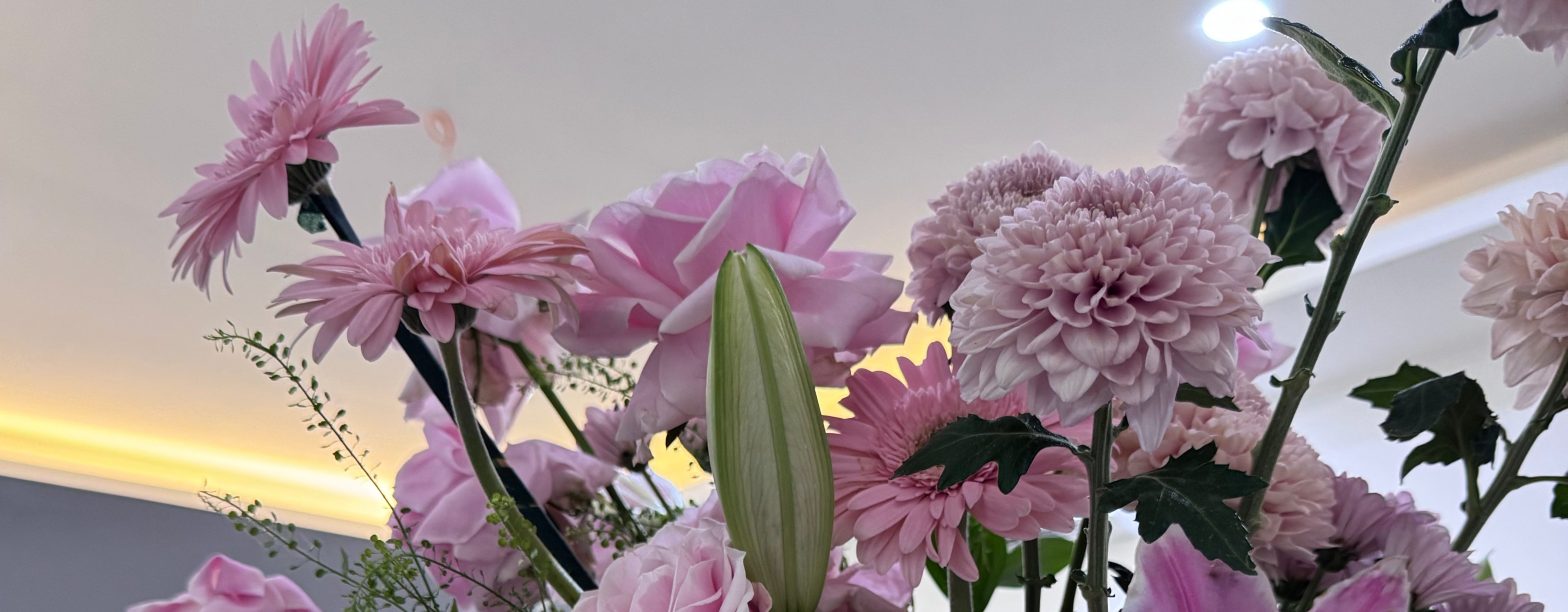
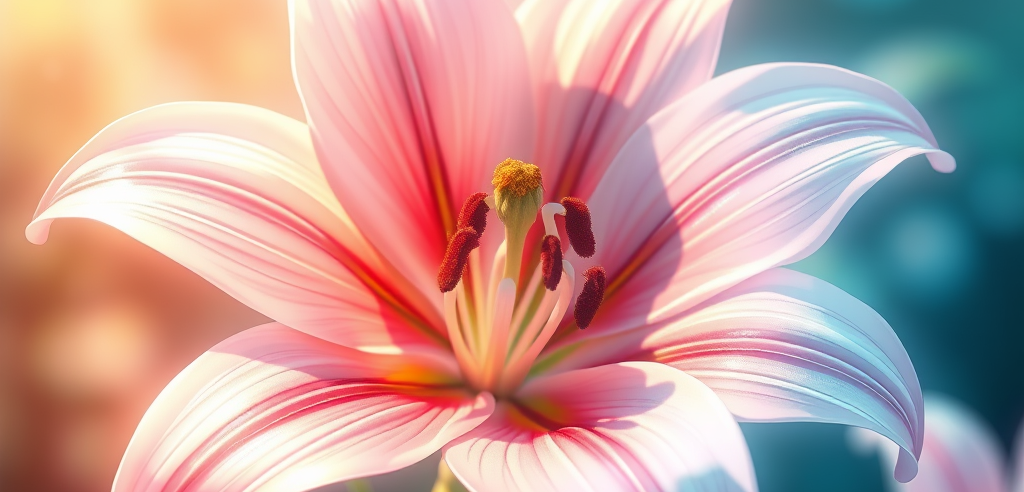
Lately I’ve been obsessed with lilies.
They’ve always been my flower. I can’t fully explain why. There’s something about the way they open, slow and quiet, like they have nothing to prove. They don’t rush. They don’t apologise for being delicate. And they grow from bulbs that spend a long time in the dark, underground, looking like nothing at all, before they rise.
Maybe that’s why they’ve always had a special place in my heart. They know something about waiting in the dark. About trusting that the light will come. About coming up anyway.
So this is where I am at thirty-eight: somewhere underground, in the long dark part. Crying at night. Holding on during the day. A cup of coffee in my hands, a long road ahead of me, and a small voice that won’t let me give up. And above it all, the One who is closer than my throat.
Not blooming yet.
But lilies don’t bloom because the dark was easy. They bloom because they kept trusting the light through it.
So today, I’m not celebrating a perfect life. I’m celebrating a life that kept going. I’m celebrating the mornings I got up anyway, the boundaries I kept even when it hurt, and the times I chose kindness when I had every reason to be bitter. I’m celebrating coffee that tastes good, sons who speak all the time, friends who check in, long roads, late-night writing, and lilies that wait patiently in the dark.
Thirty-eight years in between black and white. Not everything is bright. Not everything is lost.
I keep going. And I’m letting go. Both at once.
Happy birthday to me. You made it this far. Keep growing.